Stress Management The Basics
Stress is a natural response of the body to perceived threats or demands, and it manifests in both physiological and psychological forms. Physiologically, stress triggers the release of hormones such as cortisol and adrenaline, preparing the body for a “fight or flight” response. This response includes increased heart rate, rapid breathing, and heightened alertness, preparing an individual to confront or flee from a challenging situation. However, when stress becomes chronic, it can lead to detrimental effects on physical health, including weakened immune function, cardiovascular issues, and gastrointestinal problems.
Read More: Best Health Insurance for Freelancers in 2025

On the psychological front, stress affects mental health significantly. While experiencing normal levels of stress can lead to motivation and increased focus, excessive stress can exacerbate issues like anxiety, depression, and in severe cases, may contribute to disorders such as schizophrenia or bipolar disorder. Individuals under prolonged stress may find it difficult to concentrate, experience mood swings, or even face emotional exhaustion. Recognizing these psychological symptoms is vital, as they can significantly impact one’s quality of life.
Different types of stress can affect individuals uniquely. Acute stress is a natural response to immediate threats, while chronic stress occurs over extended periods due to ongoing pressure, such as financial difficulties or workplace demands. Another category is eustress, which refers to positive stress that can motivate individuals towards achieving their goals. In contrast, distress is negative stress, typically associated with anxiety or tension, leading to mental health deterioration. Understanding these variations is crucial for effectively implementing stress management tips into daily life.
By acknowledging the complex relationship between stress, our mental state, and overall health, individuals can better assess their own stressors and the significance of managing them appropriately for improved mental well-being.
Identifying Your Stress Triggers
Understanding the factors that elevate your stress levels is crucial for effective stress management. Identifying your personal stress triggers allows you to develop tailored coping strategies that can significantly improve your mental health. Begin by maintaining a stress diary, a simple yet powerful tool that enables you to record instances of stress and the circumstances surrounding them. In your diary, jot down your emotional reactions, your physical responses, and any other noticeable patterns that emerge during these stressful episodes.
In order to gain more insights into your triggers, reflect on both your immediate and historical experiences. Consider various factors including work-related pressures, personal relationships, financial burdens, or health concerns. Pay attention to situations that catalyze feelings of depression, anxiety, or even manifestations linked to mental health conditions such as schizophrenia or bipolar disorder. By taking the time to reflect on these instances, you can begin to identify common themes that contribute to your stress, offering a clearer understanding of how to approach them.
Additionally, being aware of your emotional responses is vital. Do certain events lead you to feel overwhelmed or anxious? Are there specific individuals or situations that consistently generate feelings of unease? Acknowledging these stress triggers not only cultivates self-awareness but also lays the groundwork for implementing effective stress management tips. By understanding what ignites your stress, you can proactively work towards mitigating these factors, thereby enhancing your emotional well-being and resilience in the face of life’s challenges.
Mindfulness and Meditation Techniques
Incorporating mindfulness and meditation techniques into one’s daily routine can significantly contribute to effective stress management. These practices not only enhance mental health but also serve as powerful tools for alleviating symptoms of depression, anxiety, and other related conditions. One of the most accessible mindfulness practices is deep breathing. This technique involves focused attention on breath, allowing individuals to cultivate a sense of presence and calm. For beginners, a simple exercise involves inhaling deeply through the nose for a count of four, holding the breath for a count of four, and then exhaling slowly through the mouth for a count of four. This cycle can be repeated several times, providing an immediate sense of relief from stress.
Guided imagery is another effective method that can enhance relaxation and lower stress levels. This technique entails visualizing a peaceful scene, such as a tranquil beach or a serene forest, which can transport the mind away from stressors. To practice this technique, find a quiet space, close your eyes, and mentally visualize a calming environment. Engaging all your senses—imagining the sounds, smells, and sensations—can deepen the experience and contribute to mental well-being.
Body scans are also beneficial, calming the mind and body by increasing awareness of physical sensations. During this practice, individuals lie down comfortably and mentally scan their body from head to toe, focusing on any areas of tension or discomfort. Recognizing these sensations can promote relaxation and encourage the release of stored stress. For optimal results, it is advisable to set aside a few minutes each day for these mindfulness practices, gradually integrating them into one’s lifestyle. Regular engagement in these techniques can foster resilience against stress and improve overall mental health, making them vital components of a comprehensive stress management strategy.
Physical Activity: A Natural Stress Reliever
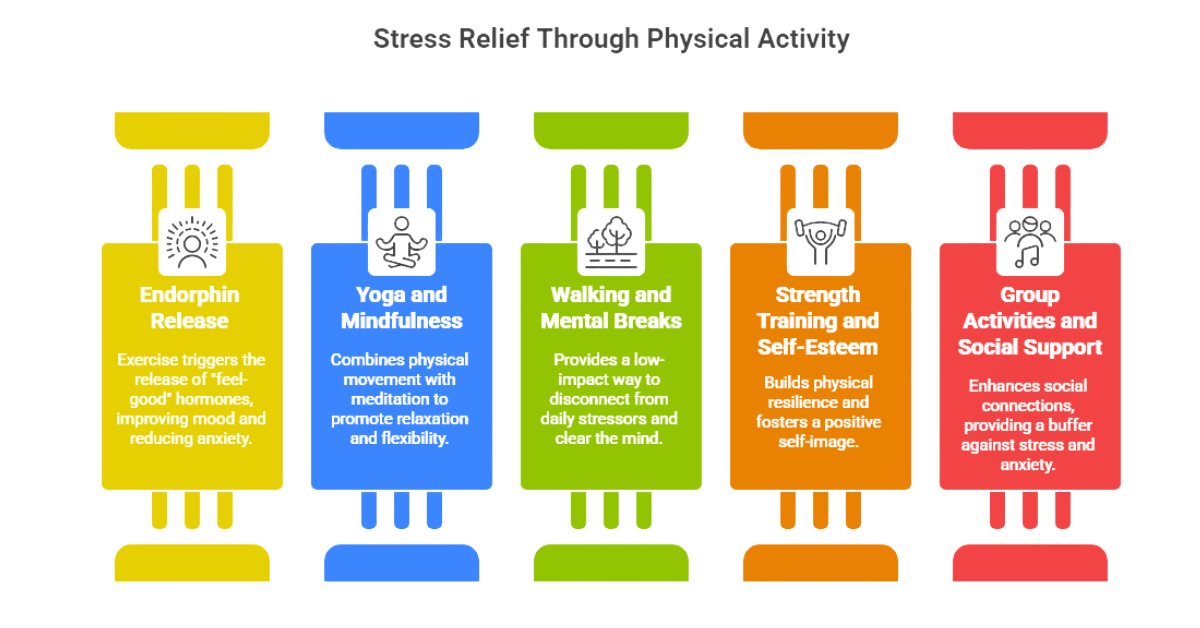
Engaging in physical activity has been widely recognized as an effective method for managing stress and promoting overall mental health. Regular exercise allows individuals to release endorphins, often referred to as “feel-good” hormones, which can significantly improve mood and reduce feelings of anxiety and depression. This natural response helps mitigate the physiological effects of stress, demonstrating a clear link between physical exertion and emotional well-being.
Various forms of exercise can serve as effective stress management tips. For instance, yoga combines physical movement with mindfulness, promoting relaxation and enhancing flexibility. Its focus on breath control and meditation can alleviate symptoms associated with anxiety and improve one’s ability to cope with stressful situations. Similarly, walking, a low-impact and accessible form of exercise, can offer a means to disconnect from daily stressors. Whether it’s a brisk walk in a nearby park or a leisurely stroll around the neighborhood, this activity can serve as a mental break and aid in decluttering the mind.
Strength training is another beneficial option, as it not only builds physical resilience but also instills a sense of accomplishment. Engaging in weightlifting or resistance exercises can boost self-esteem and foster a positive self-image, which is vital for managing mental health issues like bipolar disorder or schizophrenia. Furthermore, incorporating group activities, such as team sports or dance classes, can foster social connections that provide support in times of stress. The camaraderie developed through shared physical experiences can act as a buffer against anxiety and emotional distress.
Ultimately, prioritizing physical activity as part of a comprehensive approach to stress management can lead to improved mental health outcomes. By integrating regular exercise into one’s routine, individuals can bolster their resilience against stress and enhance their overall quality of life.
The Importance of Sleep for Stress Management
Sleep plays a crucial role in managing stress and maintaining mental health. When individuals experience sleep deprivation, the repercussions can extend beyond mere fatigue. Insufficient sleep often exacerbates symptoms of anxiety, depression, and other mental health conditions, such as schizophrenia and bipolar disorder. Cognitive functions, emotional stability, and overall physical health are significantly compromised when proper sleep is not prioritized.
Notably, sleep deprivation can lead to heightened levels of cortisol, the body’s primary stress hormone. This increase can create a cyclical pattern where stress leads to poor sleep, which in turn leads to increased stress levels. Hence, recognizing the importance of sleep is an essential aspect of effective stress management. To combat these negative effects, individuals can adopt several sleep hygiene practices. These include establishing a relaxing bedtime routine that may involve reading or meditating, minimizing screen time before sleep, and creating a comfortable sleep environment that is dark, quiet, and cool.
Maintaining a regular sleep schedule is equally vital for managing stress. Going to bed and waking up at the same time each day helps regulate the body’s internal clock, which can enhance both the quality and quantity of sleep. It is recommended to aim for 7-9 hours of sleep each night for optimal mental health. By prioritizing restorative sleep, individuals are better equipped to manage daily stressors effectively and improve their overall well-being. Therefore, integrating these stress management tips related to sleep into one’s lifestyle is a fundamental step in achieving and sustaining mental health.
Nutritional Choices that Support Stress Management
The connection between diet and mental health is well-established, and making informed nutritional choices can significantly influence stress levels. Certain foods have been shown to lower stress hormones and enhance mood, which can be particularly beneficial for those experiencing anxiety, depression, or other mental health issues such as bipolar disorder and schizophrenia. Incorporating nutrient-rich foods into your diet can provide essential vitamins and minerals that support brain function and emotional wellbeing.
For instance, omega-3 fatty acids, found in fatty fish like salmon and mackerel, are known to have anti-inflammatory properties that can improve mental health. Research indicates that omega-3s can play a role in reducing symptoms of depression and anxiety. Additionally, incorporating whole grains, such as brown rice and quinoa, can help stabilize blood sugar levels, which is vital for maintaining steady energy and mood throughout the day. Whole grains also enhance serotonin production, a neurotransmitter that contributes to feelings of well-being.
Moreover, fruits and vegetables abundant in antioxidants, particularly leafy greens, berries, and citrus fruits, can combat oxidative stress, promoting mental clarity and emotional health. These foods contribute to reducing levels of the stress hormone cortisol. Conversely, it is advisable to limit the intake of processed foods, excessive caffeine, and sugar, which can lead to spikes in anxiety and mood swings. These substances often exacerbate the symptoms associated with various mental health conditions.
By prioritizing a balanced diet rich in these beneficial foods, individuals can improve their stress management strategies and support their overall mental health. Implementing these dietary changes can not only help reduce immediate stress levels but also foster long-term emotional resilience, ultimately contributing to a healthier lifestyle.
Building a Support Network
One of the most effective stress management tips involves establishing a strong support network. The significance of social connections cannot be overstated, particularly when it comes to mental health challenges such as depression and anxiety. Surrounding oneself with supportive friends and family creates a buffer against the pressures of daily life. These relationships provide a sense of belonging and emotional reassurance, which can positively influence one’s overall well-being.
In addition to relying on personal connections, engaging with support groups can be immensely beneficial. Such groups often comprise individuals facing similar challenges, enabling shared experiences and mutual understanding. Participants can learn from one another’s strategies for managing mental health issues, including dealing with conditions like schizophrenia or bipolar disorder. These interactions foster a collaborative environment where members can express their feelings openly, reducing feelings of isolation and helplessness that stress can exacerbate.
Professional help can also play a crucial role in developing a robust support network. Therapists and counselors offer not only guidance and coping strategies but also create a safe space where individuals can explore their feelings without judgment. Various forms of therapy, including cognitive behavioral therapy (CBT), have proven effective in managing the symptoms related to anxiety and depression. Mental health professionals can connect clients with additional resources or support systems tailored to their specific needs, promoting a comprehensive approach to stress management.
Ultimately, fostering strong relationships and seeking help when needed can significantly improve one’s ability to cope with stress. Building a supportive environment enhances resilience, bolsters motivation, and cultivates a proactive stance toward life’s challenges. As you focus on your mental health, remember that the connections you nurture can serve as a cornerstone in your journey toward effective stress management.
Time Management Strategies for Reducing Stress
Effective time management is crucial for minimizing stress and enhancing mental health, particularly for individuals facing challenges such as anxiety, depression, schizophrenia, or bipolar disorder. By implementing structured strategies, one can significantly alleviate the pressures that lead to increased stress. Prioritization is one of the foundational techniques in this process. By identifying which tasks hold the most significance, individuals can allocate their time wisely, leading to a sense of accomplishment and reduced stress levels.
Setting realistic goals is another essential component of time management that can foster a healthier mindset. Goals should be Specific, Measurable, Achievable, Relevant, and Time-Bound (SMART). By ensuring that objectives are attainable, individuals are less likely to encounter feelings of overwhelm, which can exacerbate issues related to mental health. For instance, breaking larger projects into smaller, manageable tasks can make them feel less daunting, contributing to improved overall well-being.
Delegating tasks is also an effective strategy in managing time. Sharing responsibilities can relieve some of the burdens we place on ourselves, which can be particularly beneficial for those experiencing stress often linked to mental health disorders. By communicating with colleagues, family, or friends about the distribution of tasks, it allows for enhanced collaboration while reducing individual pressure. This collaborative effort not only improves efficiency but also provides an opportunity for social support, which is vital for emotional resilience.
Utilizing tools such as to-do lists and calendars can further assist in organizing tasks systematically. These tools offer a visual representation of responsibilities, helping individuals to stay focused and on track. Scheduling specific times for breaks throughout the day can also enhance productivity, reducing the likelihood of burnout. By incorporating these time management strategies into daily routines, individuals may significantly improve their ability to manage stress effectively while supporting their mental health.
Long-term Stress Management Practices
Managing stress effectively over the long term requires a proactive and personalized approach. One of the most beneficial strategies in this regard is creating a tailored stress management plan. This plan should encompass various techniques that resonate with your individual needs and lifestyle. For instance, if you find mindfulness and meditation practices beneficial for alleviating anxiety and improving mental health, incorporate them into your routine. Likewise, consider including physical activities that you enjoy, as exercise is well-known for its ability to reduce symptoms of depression and anxiety by releasing endorphins.
In addition to a structured plan, consistent self-care routines are an essential element of long-term stress management. Self-care involves prioritizing your mental, emotional, and physical well-being. This could manifest through engaging in hobbies, ensuring adequate rest, or pursuing relaxation techniques. Regular breaks during work to practice deep breathing or stretching can also contribute positively to managing chronic stress levels. Furthermore, establishing healthy boundaries while socializing or working can act as a protective barrier against the buildup of stress, ultimately supporting mental wellness.
It is crucial to understand that stress management is not a one-size-fits-all process. As life circumstances evolve, so should your approach to handling stress. Continuously evaluating and adjusting your strategies can enhance their effectiveness. This might involve revisiting your stress management plan periodically, assessing what techniques work or don’t work, and making necessary modifications. Emphasizing flexibility allows for an adaptive response to experiences such as significant life changes, which may influence stress levels. Overall, sustainable stress management practices that integrate these elements can lead to improved mental health and resilience against conditions such as anxiety, depression, schizophrenia, or bipolar disorder.
What is the fundamental difference between “good” stress and “bad” stress?
Stress is a natural body response. Eustress is positive stress that motivates you towards goals, while Distress is negative stress, often associated with anxiety or tension, which can deteriorate mental health.
How does chronic stress physically and psychologically affect the body?
Physiologically, chronic stress leads to detrimental effects like weakened immune function, cardiovascular issues, and gastrointestinal problems. Psychologically, it can exacerbate anxiety, depression, and may contribute to more severe disorders if left unchecked.
What is the most effective way to identify my personal stress triggers?
Start by keeping a stress diary to record instances of stress, including your emotional reactions, physical responses, and the circumstances surrounding them. This helps you recognize patterns like work pressure, relationship issues, or financial burdens.
What simple mindfulness technique can I use for immediate stress relief?
Deep Breathing is highly effective. Inhale deeply through the nose for a count of four, hold for four, and exhale slowly through the mouth for four. Repeating this cycle can provide an immediate sense of calm.
How does physical activity act as a “natural stress reliever”?
Engaging in exercise releases endorphins (the body’s “feel-good” hormones), which significantly improve mood and reduce feelings of anxiety and depression, counteracting the physiological effects of stress.