
Health insurance has become one of the most essential aspects of financial planning in the United States. In 2025, with healthcare costs continuing to rise, having a solid health insurance plan isn’t just recommended it’s a necessity. Whether you’re a U.S. resident seeking reliable coverage or an international student or expat from countries like India, finding the right plan can be overwhelming due to the vast number of options available.
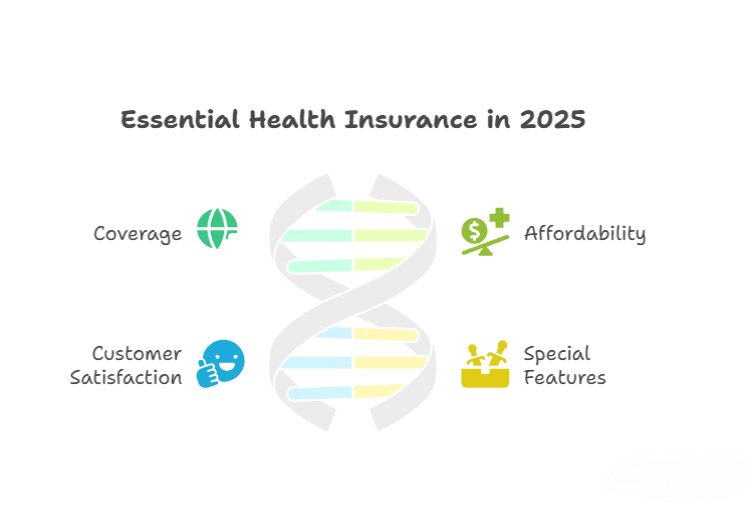
This comprehensive guide covers the 10 best health insurance plans in the U.S. for 2025, based on coverage, affordability, customer satisfaction, and special features. These strategies are appropriate for seniors, families, students, and individuals..
Why It’s Important to Select the Correct Health Insurance Plan in 2025
Make sure your preferred hospitals and doctors are included by checking provider networks in the U.S. That’s where health insurance steps in to help cover costs associated with:
- Doctor visits
- Hospitalization
- Surgery
- Prescription drugs
- Preventive care
- Mental health services
Without proper insurance, you’re not only vulnerable to massive medical bills but also may miss out on regular preventive care. The right plan gives you peace of mind, access to quality care, and protection against financial ruin.
What’s New in Health Insurance for 2025?
In 2025, several key trends have reshaped the U.S. health insurance landscape:
- Digital-first healthcare: Telemedicine and virtual care are now standard across most major providers.
- Increased focus on mental health: More insurers now include mental health counseling and psychiatric care in standard plans.
- Affordable Care Act (ACA) Expansion: ACA-compliant plans are more accessible and better subsidized.
- Flexible plans for gig workers & freelancers: Short-term and customized coverage is becoming more common.
Comprehensive Summary: The Top 10 Health Insurance Plans for 2025
Here’s a closer look at the best-performing plans this year:
1. Blue Cross Blue Shield (BCBS)
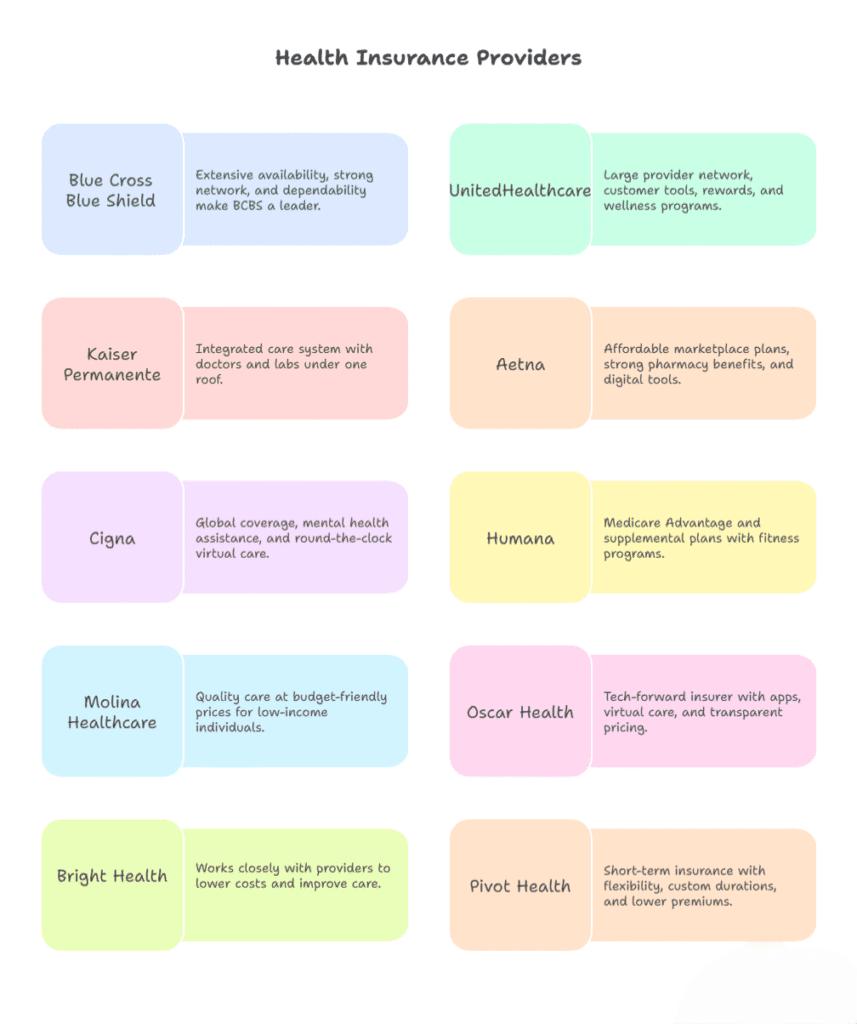
Because to its extensive availability, strong network, and dependability, BCBS continues to be a leader. Your needs will probably be met by a BCBS plan, whether you live in Texas or New York. Their global coverage also makes it ideal for frequent travelers.
2. UnitedHealthcare
Known for one of the largest provider networks in the country, UHC offers outstanding customer tools, rewards for healthy habits, and well-integrated wellness programs. It’s a great choice for families and individuals with chronic health issues.
3. Kaiser Permanente
This non-profit healthcare provider continues to shine with its fully integrated care system. From doctors to labs, everything is under one roof resulting in better coordination and efficiency.
4. Aetna
Backed by CVS Health, Aetna provides affordable marketplace plans and strong pharmacy benefits. Their Medicare Advantage options are highly rated, and digital tools make plan management easy.
5. Cigna
Cigna offers global coverage, making it perfect for international students and expats. It is suited to contemporary lifestyles and offers significant mental health assistance and round-the-clock virtual care.
6. Humana
Primarily focused on seniors, Humana offers Medicare Advantage and supplemental plans with great added benefits, such as fitness programs and wellness coaching.
7. Molina Healthcare
This is one of the best choices for low-income individuals or those eligible for Medicaid. Molina provides quality care at budget-friendly prices.
8. Oscar Health
This tech-forward insurer offers beautifully designed apps, easy access to virtual care, and a transparent pricing structure. It’s a great option Oscar Health for young adults and tech-savvy users.
9. Bright Health
Bright Health is known for working closely with selected providers to lower costs and improve care quality. Though available in limited states, it’s rapidly expanding.
10. Pivot Health
For those needing short-term insurance (e.g., between jobs or international visitors), Pivot Health offers flexibility, custom durations, and lower premiums though it’s not ACA-compliant.
How to Choose the Best Health Insurance Plans
Read More: Workers Compensation Insurance in New Jersey: 13 Power Tips

Here are a few practical tips to help narrow your choices:
- Assess your health needs: Do you need frequent care or specialist visits?
- Consider your budget: Balance premiums, deductibles, and copays.
- Verify provider networks to make sure the hospitals and physicians of your choice are included.
- Look at extra benefits: Does the plan offer dental, vision, mental health, or wellness programs?
- Understand coverage limits: Some short-term or cheaper plans may not cover everything.
Top 10 Health Insurance Plans in the U.S.
1. Blue Cross Blue Shield (BCBS)
- Coverage Area: Nationwide (36 independent companies)
- Features:
- Wide provider network across all 50 states
- ACA-compliant plans
- Telehealth services included
- Benefits:
- Strong customer service
- International coverage available
- Ideal for both individuals and families
2. UnitedHealthcare
- Coverage Area: Nationwide
- Features:
- Access to one of the largest networks
- Offers employer and individual plans
- Free wellness programs
- Benefits:
- Easy mobile app access
- High customer satisfaction
- Great for chronic condition management
3. Kaiser Permanente
- Coverage Area: 8 states + Washington D.C.
- Features:
- Integrated care system (insurance + hospitals)
- Excellent preventive care
- Benefits:
- High-quality service
- Efficient care coordination
- Affordable premiums
4. Aetna (a CVS Health Company)
- Coverage Area: Nationwide
- Features:
- ACA marketplace plans
- Dental, vision, and Medicare Advantage plans
- Benefits:
- Affordable pricing
- Strong pharmacy integration
- Ideal for seniors and employers
5. Cigna
- Coverage Area: 13 states (Individual plans) + Global coverage
- Features:
- Comprehensive coverage
- Virtual care 24/7
- Benefits:
- Strong global presence
- Great for international students and travelers
- Multiple savings programs
6. Humana
- Coverage Area: Nationwide (mainly Medicare)
- Features:
- Best for Medicare Advantage Plans
- Fitness & wellness programs
- Benefits:
- Great customer service
- Low out-of-pocket costs
- Excellent for seniors
7. Molina Healthcare
- Coverage Area: 18 states
- Features:
- Medicaid and Marketplace plans
- Specialized care management
- Benefits:
- Budget-friendly
- Inclusive of mental health services
- Good for low-income familiesa
8. Oscar Health
- Coverage Area: Select states
- Features:
- Tech-driven healthcare
- Easy-to-use mobile platform
- Benefits:
- Transparent pricing
- Free virtual care
- Great for millennials and digital-first users
9. Bright Health
- Coverage Area: Limited states
- Features:
- Value-based care approach
- Personalized health support
- Benefits:
- Affordable plans
- Simplified claims process
- Growing in popularity for ACA plans
10. Pivot Health
- Coverage Area: Nationwide (short-term plans)
- Features:
- Short-term health insurance options
- Custom coverage duration
- Benefits:
- Flexible pricing
- Good for gap coverage or students
- Great for self-employed or freelancers
Plan Comparison Table: Pros and Cons
| Health Insurance Provider | Pros | Cons |
| Blue Cross Blue Shield | Nationwide reach, trusted brand | Varies by state |
| UnitedHealthcare | Broad network, wellness rewards | Higher premiums |
| Kaiser Permanente | Integrated care, excellent service | Limited state availability |
| Aetna | CVS integration, affordable | Not in all states |
| Cigna | International coverage, virtual care | Smaller U.S. footprint |
| Humana | Best Medicare Advantage plans | Limited to seniors |
| Molina | Affordable, good Medicaid coverage | Not ideal for high-income earners |
| Oscar Health | Digital-first, easy to use | Limited availability |
| Bright Health | Value-based care, cheap plans | Not widely available |
| Pivot Health | Flexible, good temporary coverage | Not ACA-compliant |
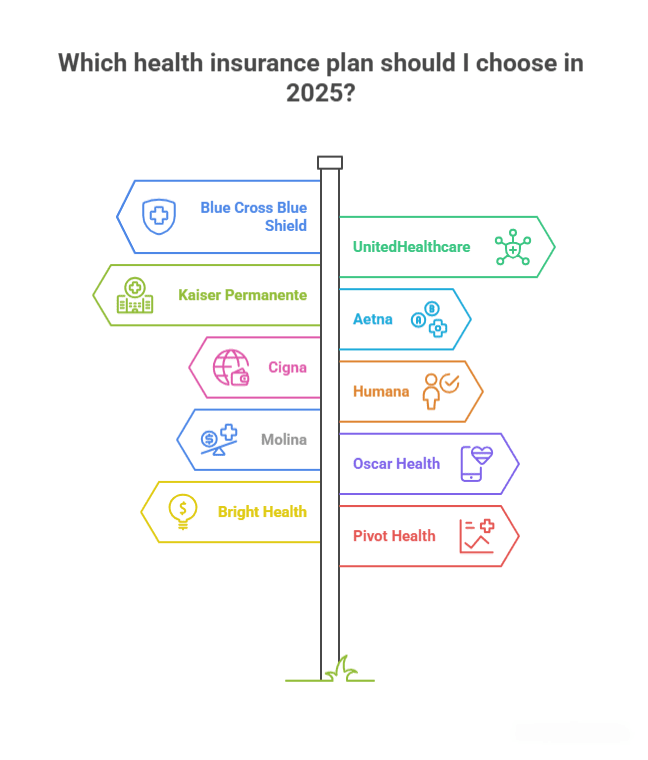
Which Plan Should You Choose in 2025?
A number of factors determine your optimum health insurance plan:
- Location: Some states do not offer all plans.
- Budget: Premiums, deductibles, and out-of-pocket costs vary.
- Health Needs: Chronic illness, pregnancy, or special care requirements?
- Eligibility: Some plans cater only to specific groups like seniors or low-income individuals.
For U.S. Residents: If you’re looking for full coverage with a wide provider network, Blue Cross Blue Shield or UnitedHealthcare are top picks.
For Indian Students or Expats in the U.S.: Cigna and Aetna offer international coverage and digital tools ideal for travelers.
For Seniors: Humana and Kaiser Permanente are excellent choices for Medicare Advantage and coordinated care.
Stay Covered, Stay Confident
Selecting the best health insurance plan in the United States is crucial given the projected rise in healthcare expenses in 2025. is more important than ever. From trusted names like Blue Cross Blue Shield to tech-driven innovators like Oscar Health, the market offers something for everyone.
Whether you’re based in the U.S. this list of the top ten health insurance plans in the United States, or relocating from India. (2025) provides a solid starting point to make an informed, confident decision.
Q1. Which health insurance plan in the United States is best for overseas students?
Students benefit greatly from the superior worldwide coverage provided by Cigna and Aetna.
Q2. Which health insurance provider has the largest network?
Blue Cross Both Blue Shield and UnitedHealthcare offer wide-ranging national networks.
Q3. Can Indian citizens buy U.S. health insurance plans?
Yes, non-citizens including Indian students, workers, and visitors can purchase U.S. health insurance plans, especially through providers like Cigna or Pivot Health.
Q4. Are short-term plans a good choice for 2025?
Yes, if you need temporary coverage. Pivot Health offers customizable short-term plans.
Q5. How do I compare health insurance plans easily?
Use the HealthCare.gov marketplace or insurance comparison platforms for detailed side-by-side comparisons.


This article cleared up a lot of confusion I had, thank you!
I appreciate how you included real-life examples, it made the content more relatable.
Very well explained! Looking forward to more posts like this.
I appreciate that you kept the post detailed but still easy to follow.
I never realized how important this aspect of insurance was until I read this.
I like how you focused on practical examples rather than just theory.
I appreciate how you included both pros and cons it gives a balanced perspective.